


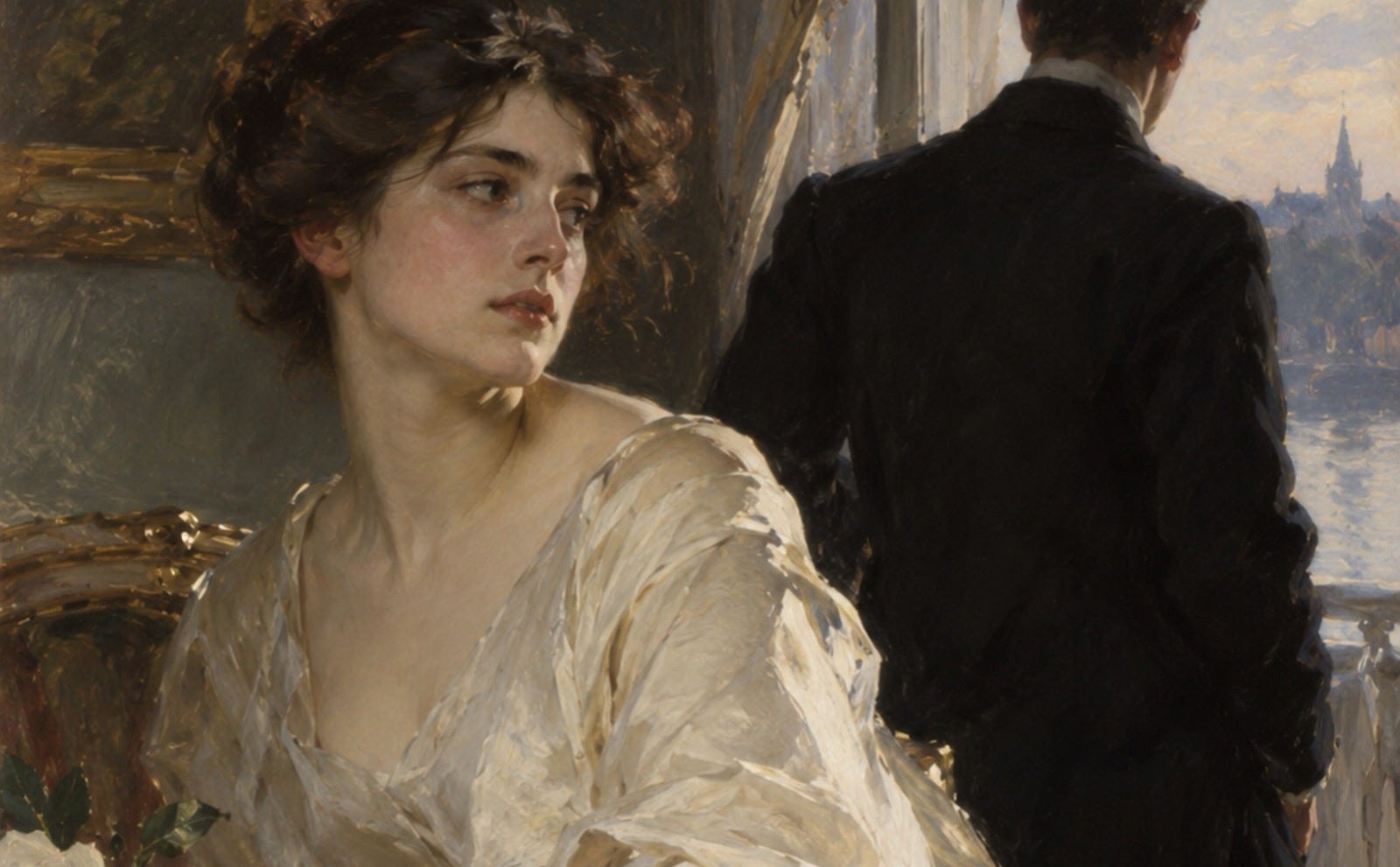
Marie had not welcomed Georgine’s birth with joy. She was already eleven at the time, and although she was still too young to understand that the arrival of a second child had suddenly deprived her of half her future inheritance, she nevertheless harboured envy and resentment toward the little creature that had come between her and her parents. Having to share their affection, their attention, and their indulgence introduced bitterness into her young life, so hungry for love, and she turned her head away with a dark look when the baby was first shown to her by the nurse.
She was offered the honour, considerable for a girl of her age, of becoming the child’s godmother. Wilful, spoiled, yet deeply sensitive, and until then an only child, she refused. Her father did not dare impose his authority or force her. During the christening celebration Marie withdrew sulkily into a corner. And far from leaving her there to get over this fit of jealousy and stubbornness by herself, the godfather and godmother—secretly prompted by the distressed mother, who had already been informed of the situation by Trientje—begged her to come to the table and coaxed her with flattery to love her little sister.
This had the worst possible effect. Marie became conscious of her power over them, while at the same time her distress increased. She burst into sobs, stamped her feet, and lashed out wildly with her hands at anyone who dared approach her. The notary was at his wits’ end: ashamed of the disturbance in front of his guests and afraid that his wife upstairs might hear the commotion. He promised Marie all kinds of things if only she would stop making such a scene, be quiet, and cry no more. Humbling himself still further, he finally came to her with a slice of almond cake and a glass of champagne, which she furiously rejected.