


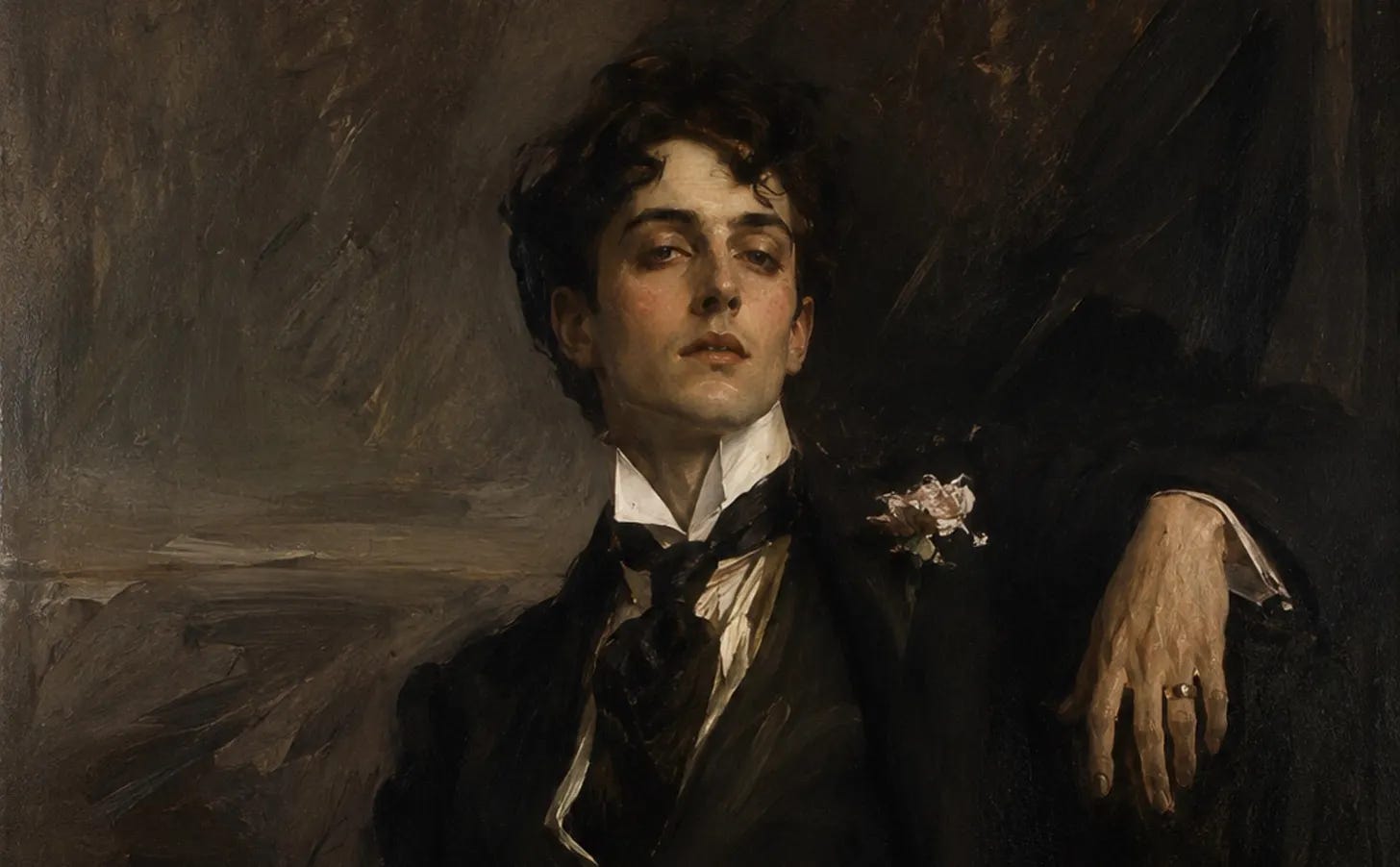
The artist creates beautiful things.
The purpose of art is to reveal the artwork while keeping the artist himself hidden.
A critic is someone who can take the impression created by something beautiful and express it in a different form or through a different medium.
Both the highest and the lowest kinds of criticism reveal something about the critic personally.
People who look at beautiful things and find ugly meanings in them are corrupt, without even having the charm that sometimes comes with corruption. That is a serious fault.
People who can find beauty in beautiful things are cultured and refined. There is hope for them.
They are the special few who understand that beautiful things should simply mean beauty.
There is no such thing as a morally good book or a morally bad book.
A book is either well written or badly written.
That is all.
The nineteenth century hates realism because realism is like Caliban looking into a mirror and becoming angry when he sees his own face.
The nineteenth century hates romanticism because romanticism is like Caliban looking into a mirror and becoming angry because he does not see his own face.
Human morality can be one of the subjects an artist explores.
But the morality of art itself lies in how perfectly the artist uses an imperfect artistic medium.
An artist does not create art in order to prove a point.
After all, even true things can be proved and argued about.
An artist should not allow moral sympathies to control the artwork.
When an artist forces moral judgment into art, it becomes an unforgivable flaw in style.
No subject is too unhealthy, dark, or disturbing for an artist.
An artist can express anything.
Thought and language are simply tools the artist can use.
Goodness and evil are also simply materials for art.
If we judge art by its form and structure, music is the best example of what all art should be.
If we judge it by emotion and feeling, acting is the best example.
All art has both a surface and a symbolic meaning.
Anyone who tries to go beneath the surface does so at their own risk.
Anyone who tries to interpret the symbols also does so at their own risk.
Art does not truly reflect life.
Instead, it reflects the person looking at it.
When people have many different opinions about a work of art, it shows that the artwork is new, complicated, and alive.
When critics disagree with one another, the artist has succeeded in remaining true to the work.
We can forgive someone for creating something useful, as long as they do not admire it.
The only good reason for creating something useless is that the creator admires it deeply.
All art is completely useless.